
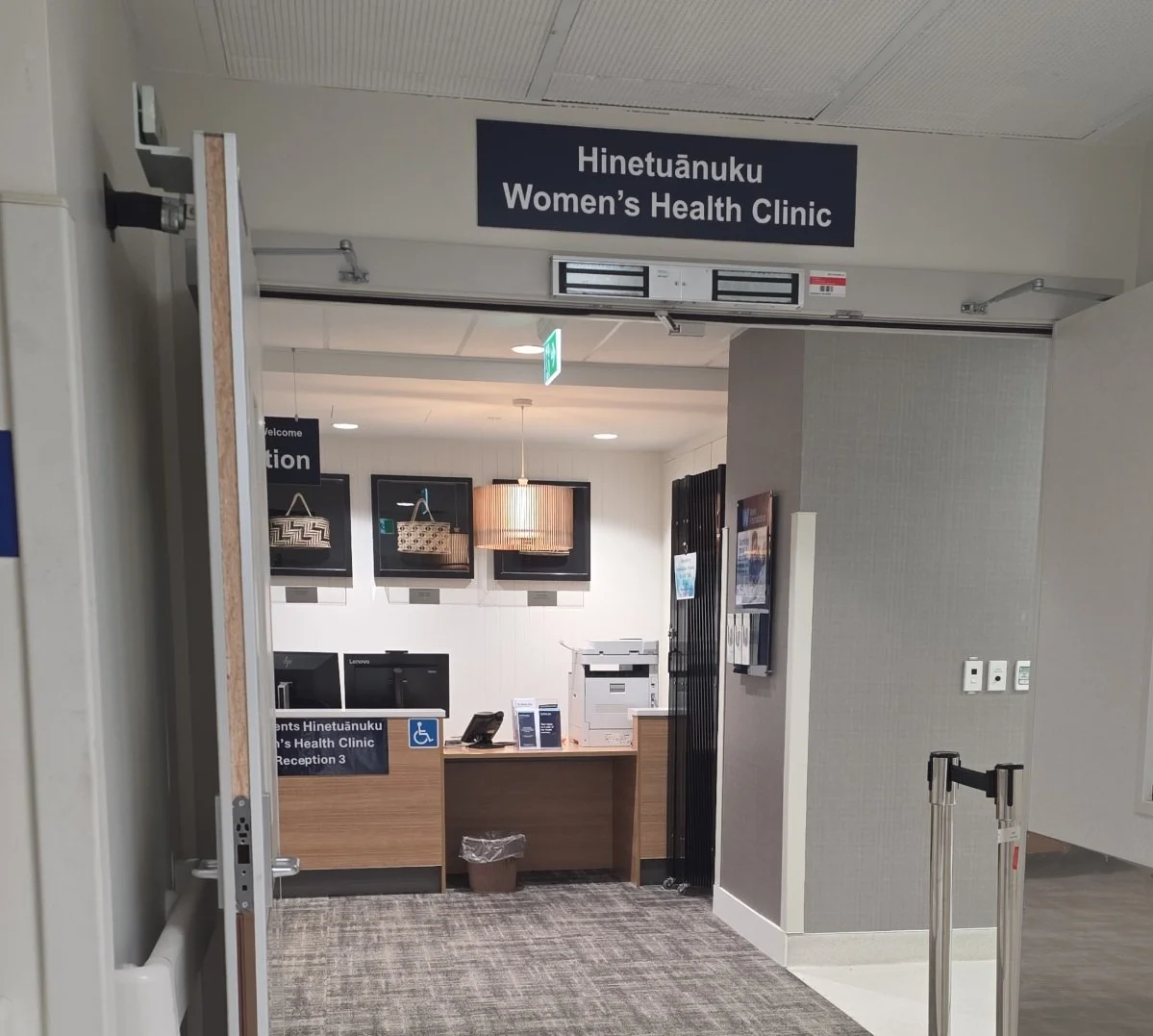
Gynaecology Clinic NSH
Gynaecology Clinic (NSH)
How to get there
Gynaecology clinic at North Shore Hospital is on the ground floor of the Main building.
Enter from the front of the hospital, through Entrance 2 and turn right. The clinic will be straight ahead.”

Gynaecology Clinic
Preparing to attend
Look up the patients before you arrive using clinical portal. Print out a list of patients and write down all relevant details eg clinical history from the referral (new patients) or last gyn letter/operation note/discharge summary (follow-up), recent blood results, recent scan results, medical/surgical history, medications/allergies.
Gynaecology clinics start at 9am and 1pm. Make sure you arrive early, I would suggest 30mins before the clinic is due to start.
Revise ‘How to do a Pelvic Examination’ on CANVAS or you can watch my video.
When you arrive
Introduce yourself to the reception staff and the nurses, say you are here to sit in on a gynaecology clinic. Ask where you should wait. If there is a spare room, you should log into the computer and get the clinic notes up, so you are ready if you are able to see patients on your own.
In clinic, there are Green sheets that have a template for taking a history from new patients. Ask the nurses where these sheets are kept. Always carry one with you so you’ll be ready to take a history if the opportunity arises.
When the doctor arrives, introduce yourself. Say that you have looked up the cases and what you are hoping to get out of this clinic.
Tips while in clinic
If you haven’t made your own print out of the patients, you could ask the receptionist if you can make a copy.
It makes a good impression if you tidy and remake the bed after a patient has been examined. So, it is a good idea to look where in the room do they keep the ‘bluey’s’ and the new ‘bed sheets’
While you are waiting you can look in the metal trolley and familiarise yourself with all the items eg swabs, smear taking equipment, different sized speculums
What you might be able to do from the logbook
Conduct a speculum/bimanual examination/swabs/smear
Assessment of clinical conditions eg Heavy Menstrual Bleeding, Incontinence (See Page 8-9)
Other opportunities to look out for
Interpret Pelvic USS report
Learn how to explain findings eg Adenomyosis, Fibroids, Polyps, Endometriosis